
.jpg)
Apricot Oil
CSV03
The exact origin of the Apricot remains uncertain. However,
it has been historically associated with Armenia, where it has been cultivated
for centuries. Some studies suggest that its native range may extend from Armenia
through the Himalayas and as far as Japan.
Apricot
Oil (BP, USP Grade – British & United States Pharmacopoeia)
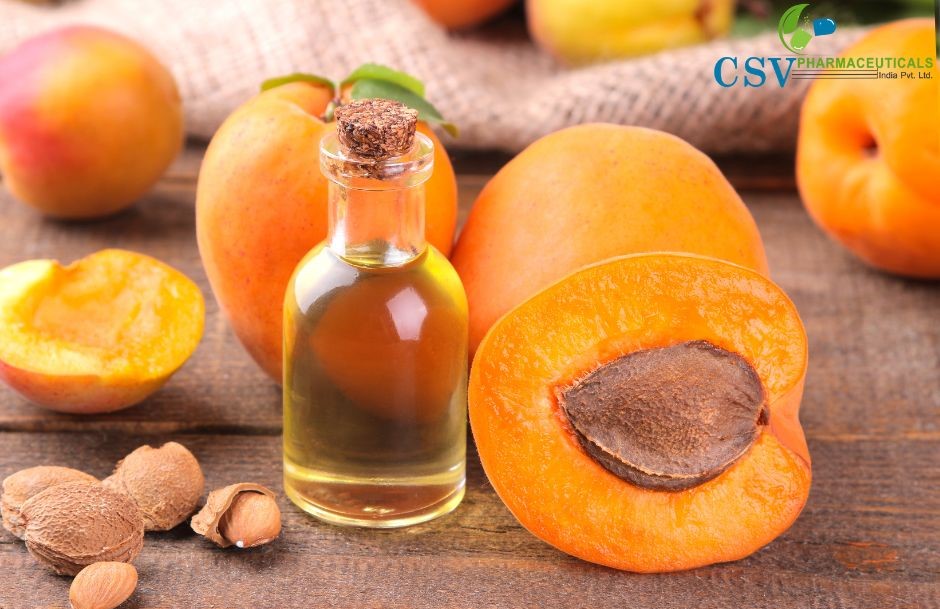
Apricot Oil is extracted from the kernel of the apricot
fruit (Prunus armeniaca). Historically used in Traditional Chinese
Medicine to treat tumours, swelling, and ulcers, it also gained prominence in 17th-century
England for similar therapeutic uses.
Current
Market Demand
Due to increasing global demand, apricot oil prices have
risen significantly. However, as a direct manufacturer, CSV Pharmaceuticals
India offers a cost-effective, high-quality solution for bulk buyers. Whether
you're sourcing from Singapore, Malaysia, South Africa, Argentina, the United
States, the UK, or the UAE, we’ve resumed global exports and are ready to serve
you.
Industrial
Applications of Apricot Oil
-Used as a natural flavouring agent in bakery products,
sauces, confectionery, and beverages.
-Popular in the tobacco industry for its natural taste.
-Applied in various industries including: Food containers, Fuel
additives, Adhesives, Hair oils, fibres, Cosmetics, Varnishes & plastics.
Extraction
Process: How We Make It
Our apricot oil is extracted using the cold-pressed method
from premium-quality apricot kernels. These kernels contain 40–50% oil,
ensuring a rich and potent yield.
Origin
& Ecological Background
While the exact origin of the apricot tree is uncertain, it
is believed to have originated in Armenia and is also native to regions
stretching from the Himalayas to Japan.
- Grows best in cold or Mediterranean climates.
-Thrives in dry summers and cold winters.
-A small deciduous tree, reaching heights of 8 to 13 metres
with a dense canopy.
11
Surprising Benefits & Uses of Apricot Oil
Pharmaceutical Uses:
1. Rich in essential vitamins and minerals.
2. Traditionally used as a supportive oil in cancer
treatments.
3. Helps reduce arthritic pain.
4. Aids in managing high blood pressure.
5. Strengthens the immune system against colds and flu.
Cosmetic Uses:
6. Works as an excellent carrier oil.
7. Easily blends with other oils for aromatherapy and
massage.
8. Used in creams, lotions, soaps, and skincare products.
9. Rich in vitamins A and E, beneficial for skin
rejuvenation.
Food & Flavouring Uses:
10. Contains vital nutrients like Vitamins A, C, and E,
potassium, and iron.
11. Used in recipes, jams, and flavoured liquors.
Physical
Characteristics & Composition
- Colour: Deep golden yellow.
- Texture: Light and non-greasy.
- Main Components: Fatty Acids: Oleic, Palmitic, Linoleic,
Linolenic, Stearic, Vitamins: A, C, E, Minerals: Potassium, Iron,
and others.
Oil
Blending (Concoction)
Apricot oil serves as a perfect base oil, blending
seamlessly with other carrier oils to enhance absorption and efficacy in
cosmetic and therapeutic applications.
Safety
Guidelines
Eye Contact:
Avoid direct contact with the eyes. If irritation occurs, rinse thoroughly with
water for at least 15 minutes and seek medical help.
Skin Contact:
If irritation persists after contact with the skin, wash with soap and water.
Consult a physician if needed.
Storage
& Handling
- Store in a cool, dark place below 25°C.
- Keep away from open flames and heat sources.
- Do not overheat.
- Do not leave containers unsealed or empty, as residue may
pose a fire risk.
Toxicological
Information
- Not suitable for individuals with nut or seed allergies.
- Not for internal use unless prescribed by a certified
aromatherapist or healthcare provider.
- If adverse skin reactions occur, discontinue use and seek
immediate medical attention.
For Bulk Orders
& Export Inquiries
